
House of Afshar Announces Global Council of Turk Communities and Heritage to Expand International Cultural Preservation Mission
Just another WordPress site
Press Release Disclaimer: This is a press release distributed through the XPR Media network. It has not been independently verified by our newsroom.


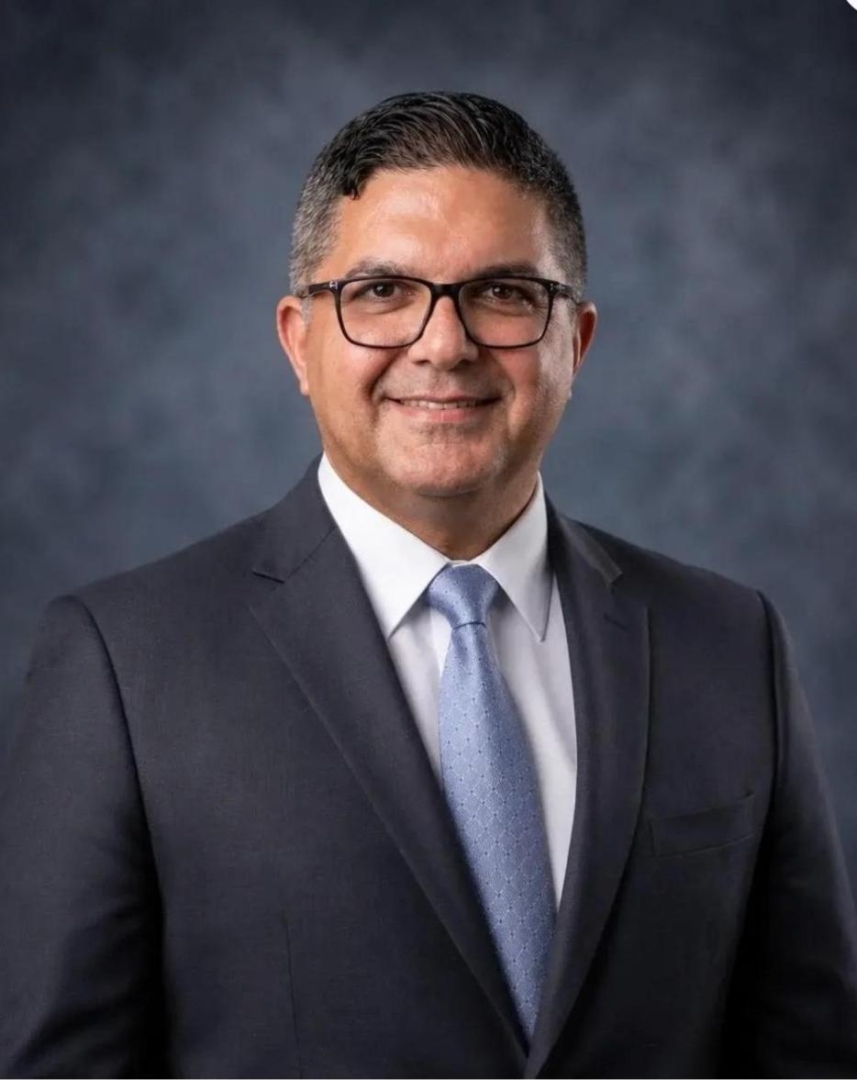
WASHINGTON, D.C. – October 14, 2026 – A New International Platform Dedicated to Unity, Cultural Preservation, Advocacy, and Giving a Voice to Turk Communities Around the World
Washington D.C. Based Non-Governmental, Non-Profit Organization – The House of Afshar today announces an important new chapter in its history. From this point forward, its broader international projects, initiatives, and public advocacy will be conducted through the Global Council of Turk Communities and Heritage, an institution established to bring together Turk communities across borders and provide a stronger international voice for communities whose history, culture, and concerns are too often absent from global conversations.
This decision reflects a simple but increasingly urgent belief in which our heritage carries a number of responsibilities with it.
For generations, the House of Afshar has worked to preserve the historical legacy, culture, traditions, and memory associated with the Afshar people. But history cannot simply be preserved in archives, books, ceremonies, and family records. It must also teach us what responsibilities we carry toward other Turks today.
Across the world, millions of people belonging to Turk communities live beyond the borders of the independent Turk states. Some are historic peoples whose communities have existed in their homelands for centuries. Others live as minorities, diaspora communities, displaced populations, or culturally distinct groups spread across Europe, Asia, the Middle East, North America, and other parts of the world.
Many have strong cultural identities but limited international visibility. Some have no state of their own to speak on their behalf. Others have little access to institutions where decisions affecting culture, language, heritage, education, human rights, and future generations are discussed.
Their stories deserve to be heard.The Global Council of Turk Communities and Heritage is being created around that principle.
The Council will seek to serve as a civil-society platform connecting Turk communities regardless of the countries in which they live. Its purpose is not to erase national identities or interfere with the sovereignty of existing states. On the contrary, outside few cases where the Turk community is to assimilate by force, unfairly to what they are not, we believe people can be loyal citizens of their respective countries while also remaining deeply connected to their language, ancestry, history, and cultural heritage.
Unity does not require uniformity.The Turk world is extraordinarily rich in history, culture, language, literature, traditions, and living experience. Turks, Afshars, Azerbaijanis, Turkmens, Uzbeks, Kazakhs, Kyrgyz, Uyghurs, Tatars, Qashqai, Gagauz, Crimean Tatars, Iraqi Turkmen, Syrian Turkmen, Ahiska Turks, and many other Turk communities have preserved distinct historical experiences and cultural traditions across generations.
Our characteristically richness should never be seen as a weakness. It is one of the great strengths of the Turk world.
What connects these communities is not a demand that everyone become the same. It is the recognition that despite borders, political systems, geography, and centuries of separation, there remains a profound historical and cultural relationship among the peoples of the Turk world.
Why We Invite Everyone to Use the Word “Turk” Instead of “Turkic”?
The Global Council deliberately uses the word “Turk” rather than the externally coined term “Turkic.” We believe that an identity should be named by the people who carry it, rather than defined through terminology developed from an outside perspective.
For us, “Turk” is not merely a linguistic or academic classification. It is a historical, cultural, and civilizational identity.
The purpose of this terminology is not to exclude any community, but to affirm the identity and self-definition of the people represented by the Council.
The challenge before us is to preserve that relationship for the next generation.Languages disappear when children stop learning them. Traditions disappear when families stop practicing them. Historical memory disappears when documents are lost and stories are no longer told. Cultural heritage can vanish quietly, one generation at a time.
Preserving heritage therefore requires more than remembering the past. It requires investing in the future.
The Global Council of Turk Communities and Heritage intends to support cultural preservation, historical research, archives, education, literature, language initiatives, academic cooperation, youth engagement, cultural exchange, conferences, publications, and international dialogue.
We also intend to create connections among communities that, despite sharing historical roots, may know very little about one another.
A young Turk person growing up in the United States should be able to discover the history of communities in Central Asia. A student in Türkiye should be able to learn about the Afshars of Iran, the Crimean Tatars, the Gagauz, or Turk communities of Iraq and Syria. A family living thousands of miles from its ancestral homeland should have access to the history, language, art, and traditions that connect them to earlier generations.
At the same time, cultural preservation alone is not enough.
Communities need voices.The Global Council will work toward responsible engagement with international institutions, civil society organizations, universities, governments, cultural organizations, and global forums, including opportunities for engagement within the wider United Nations system and other international arenas.
Our objective is to help bring attention to communities that are frequently discussed by others but rarely given an opportunity to speak for themselves.
• Where Turk cultural heritage is endangered, we should speak.• Where languages are disappearing, we should act.• Where historical monuments, manuscripts, archives, traditions, and cultural identities require preservation, we should help.• Where communities feel forgotten, we should listen.• And where dialogue can prevent division, misunderstanding, or conflict, we should build bridges.
This initiative is not directed against any people, nation, religion, or culture. The preservation of Turk heritage does not require diminishing anyone else’s heritage. Respect for one’s own identity should deepen our understanding of why other people value theirs.
The Council therefore embraces cultural diplomacy, mutual respect, peaceful coexistence, and dialogue among civilizations as fundamental principles.
Our vision of Turk unity is not political domination.• It is cooperation.• It is scholars working together.• It is communities sharing their histories.• It is young people discovering their heritage.• It is archives being protected before they disappear.• It is artists, writers, historians, educators, community leaders, and cultural organizations finding one another across borders.• And it is ensuring that a community’s size, political influence, or lack of statehood does not determine whether its heritage deserves to survive.
The House of Afshar will remain an important historical and cultural institution and the foundation from which this wider vision emerged. Its identity, archives, traditions, and historical mission will continue to be preserved. The creation of the Global Council of Turk Communities and Heritage represents an expansion of responsibility, taking the lessons of one historical house and applying them to a much larger international mission.We are stepping beyond the preservation of one heritage to help defend the principle that every Turk community should have the opportunity to preserve its own.
No single organization can accomplish this alone.For that reason, the Global Council will seek cooperation with Turk cultural organizations, community associations, scholars, historians, universities, youth organizations, heritage institutions, NGOs, community leaders, and individuals throughout the world.
We invite them not simply to join an organization, but to help build it.The Global Council must become a place where different voices within the Turk world can meet without losing their individuality. It should belong not to one country, one political ideology, one branch of history, or one organization, but to the shared responsibility of those who believe that our cultural inheritance deserves a future.
There comes a moment when preserving history requires more than looking backward. It requires standing up for those who are here today and preparing something meaningful for those who will come after us.
For the House of Afshar, that moment has arrived.We therefore step forward with humility, determination, and a sense of responsibility as the Global Council of Turk Communities and Heritage, committed to connecting our communities, preserving our shared heritage, strengthening understanding among Turk peoples, advocating for those whose voices are too rarely heard, and carrying those voices into the international arena.
GLOBAL COUNCIL OF TURK COMMUNITIES AND HERITAGE
Preserving Our Heritage. Connecting Our Communities. Delivering Every Turk Community’s Voice to the International Arena.
Chairman & President of Global Council of Turk Communities & Heritage And Deputy Director of UNESCO Center for Peace Ambassador, Emmett Imani
About the Global Council of Turk Communities and Heritage
The Global Council of Turk Communities and Heritage (GCTCH) is an organization established to advance cultural preservation, historical research, community connections, and international dialogue among Turk communities worldwide. Building on the heritage mission of the House of Afshar, the Council aims to support initiatives that preserve languages, traditions, historical records, and cultural identities while encouraging cooperation and peaceful engagement.
Media Contact
Company Name: GCTCH
Contact Person: Emmett Imani
Email: Send Email
Country: United States
Website: https://gctch.org/
Press Release Distributed by ABNewswire.com
To view the original version on ABNewswire visit: House of Afshar Announces Global Council of Turk Communities and Heritage to Expand International Cultural Preservation Mission
Media gallery


